Conference Recap: Carey Finance Conference
October 2025
Contents
This entry pertains to the Carey Finance Conference held October 16–17, 2025. I presented my paper “Limited Risk Transfer Between Investors: A New Benchmark for Macro-Finance Models” on Day 1.
Introduction
This was my first time in Baltimore, and the Carey Business School’s glass building sits right on the harbor, facing the water with the conference rooms overlooking ships.


Day 1
- Lina Han(U Mass Amherst) presented “Navigating Geopolitical Risk: Evidence from U.S. Mutual Funds.” The paper uses export controls on Chinese firms as a natural experiment to see how mutual funds handle this kind of uncertainty. The punchline: funds with exposure to affected suppliers see higher volatility and lower returns.
It seemed that the precise mechanism through which these policies transmit to asset prices is not fully pinned down in the paper. Export controls can affect valuations through three channels:
- Cash-flow channel – controls directly lower firm earnings or disrupt operations;
- Quantity of risk – firms’ returns become more sensitive to geopolitical shocks (higher covariance); and
- Price of risk – investors demand a higher premium for bearing exposure to geopolitical uncertainty. For example, the fact that managers reallocate not only away from directly affected firms but also from other China-exposed firms can be interpreted as both a cash flow channel and as a quantity of risk channel.
Day 2
- Ian Dew-Becker (Federal Reserve Bank of Chicago) presented *“How Beliefs Respond to News: Implications for Asset Prices.” *The basic idea is that if you have negatively skewed fundamentals and investors who are learning gradually, you naturally get all these complex asset pricing patterns—leverage effects, fat tails, persistent volatility—without needing a complicated model. The theoretical machinery is surprisingly clean: each moment of beliefs responds to news in a way that depends on the next higher moment. The discussant Jesse Davis raised an interesting question of whether one could flip the whole setup and get the same results with symmetric fundamentals but asymmetric signals.
- Andrei Goncalves (Ohio State) presented “Institutional Investors’ Subjective Risk Premia: Time Variation and Disagreement.” The authors have long-term return forecasts from 45 major institutional investors spanning 35 years. The punchline is that when these big players change their expected returns over time, it’s mostly because they’re updating their views on risk quantities (correlations, volatilities) rather than adjusting their risk aversion. But when they disagree with each other? Then both risk perceptions and views on mispricing matter there.
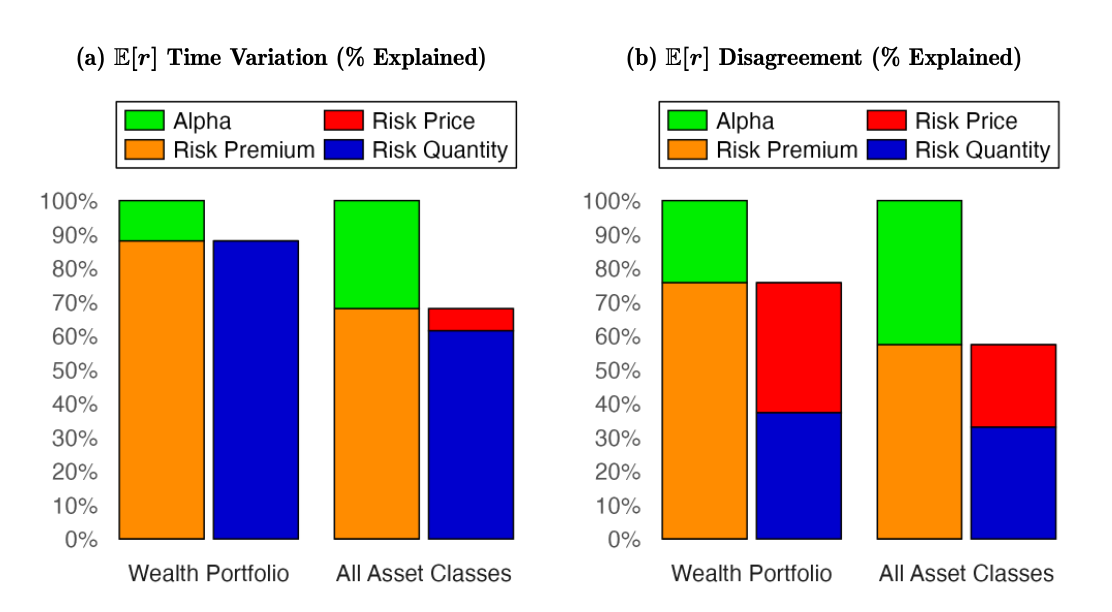 The discussion by Sofonias Korsaye emphasized that each institution effectively operates with its own security market line, and perhaps thus the representative investor assumption is too restrictive when modeling belief heterogeneity among institutional investors.
 - Huan Tang (Wharton) presented *“Data as a Networked Asset.” *The idea is that when companies share mobile app SDKs, they’re essentially creating data spillovers. Firms more connected in this network move together more in terms of performance and valuation.
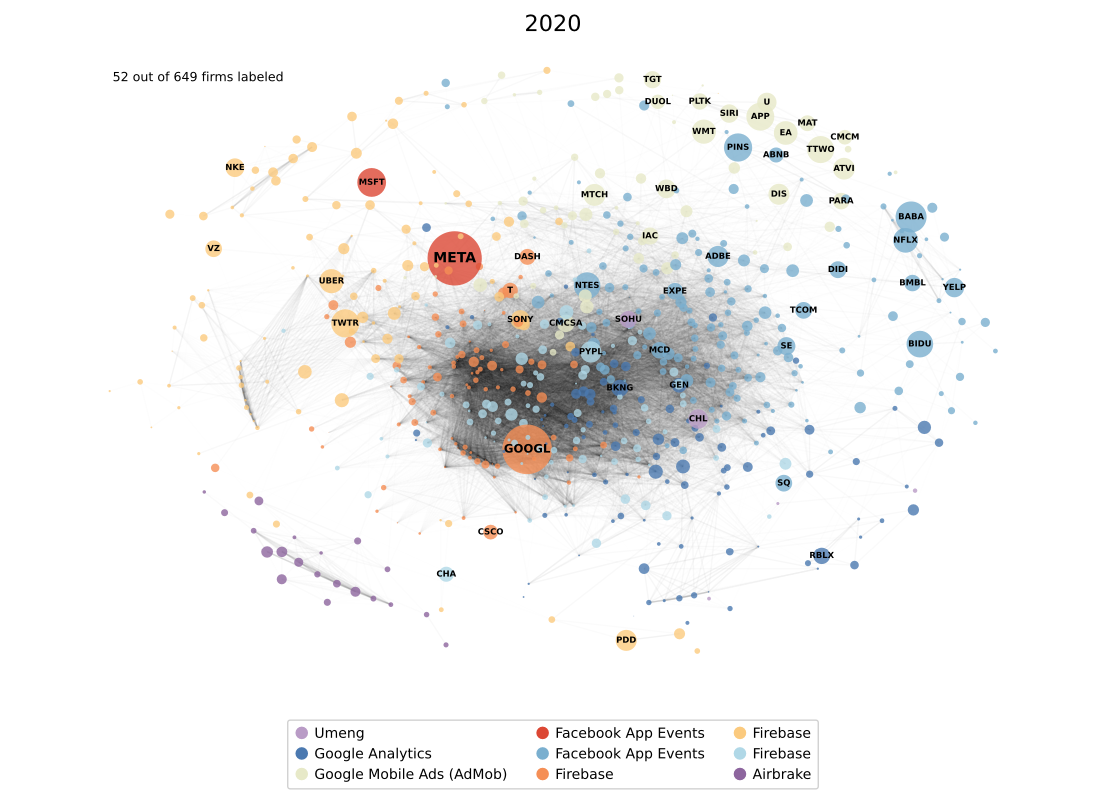 The natural question (which Giorgia Piacentino brought up) is whether this really captures data sharing or just correlated consumer demand. Still, the idea of identifying “systemically important” firms in the data economy is provocative.
 - Vincent Yao (Georgia State) presented “Will That Be Cash or Credit: The Economics of Interchange Fees and Redistribution,” which is a paper about interchange fees: the 2-3% charges that merchants pay but ultimately get passed on to all of us through higher prices. Using transaction data from Clover, he estimates this creates about a $30 billion annual transfer from cash/debit users to credit card users. Once you account for how people sort into different payment methods and merchants’ ability to negotiate, the redistribution shrinks by about a quarter. Matteo Benetton pointed out some concerns about whether the sufficient-statistics approach really works here, but the basic message is clear: payment systems have big distributional consequences we don’t usually think about.* *
- Janis Skrastins (Utah) presented “Housing and Fertility,” which studies how access to housing credit affects fertility using randomized housing lotteries (“consórcios”) in Brazil. As it turns out, when young people (20-25) win these lotteries and get mortgage credit, they’re 32% more likely to have kids. The effect completely disappears for people over 40.
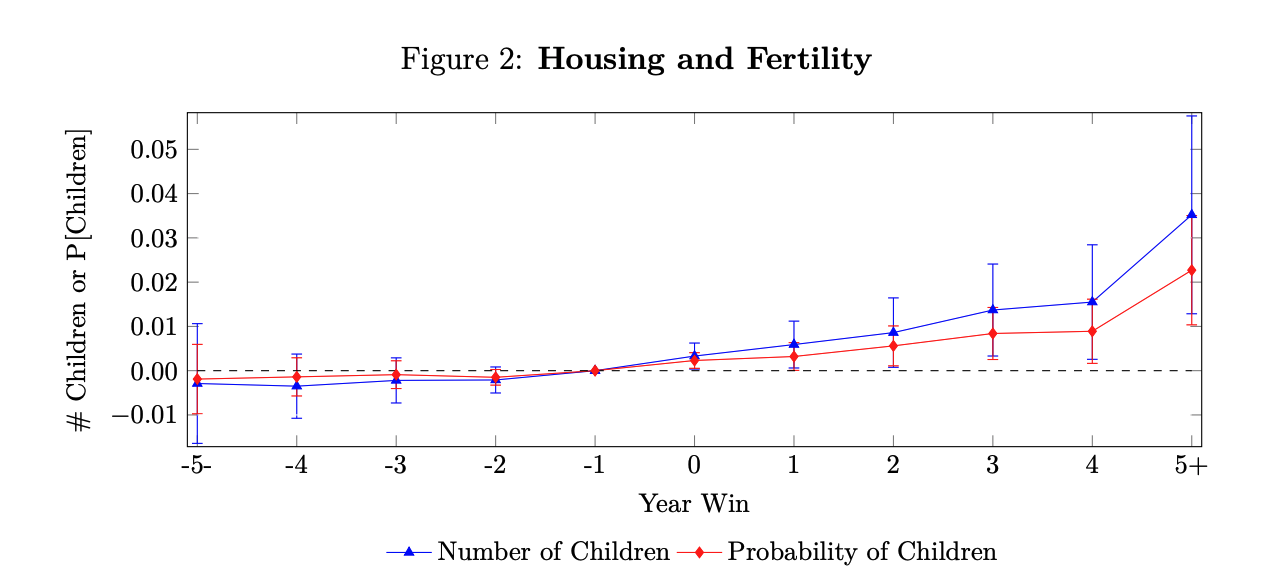 The presenter initially pitched the paper as a “how housing policy could boost fertility” story, but really it’s more about what happens when you relax credit constraints for young households (which the presenter later agreed). Not sure this tells us much about fertility in richer countries where housing access works differently.
 - Robin Döttling (Erasmus) presented “Voting on Public Goods: Citizens vs. Shareholders.” The paper develops a unified framework linking political democracy (“one person–one vote”) and shareholder democracy (“one share–one vote”). When shareholders push companies to be more socially responsible, governments might actually pull back on regulations. In a frictionless world, it wouldn’t matter who makes these decisions. But with real-world frictions, you get this tension between efficiency (maybe shareholders can target interventions better) and representation (wealthy shareholders’ preferences dominating political outcomes). The discussant Daniel Andrei (McGill) praised the paper as “Modigliani–Miller for Socially Responsible Investing,” emphasizing its elegant logic that the equilibrium outcome depends on which imperfections—political or market—bind.
Takeaways
- I think Ian Dew-Becker’s presentation and Stefan Nagel’s keynote shows the power of simple frameworks. Elegant, minimal models can often explain rich, nonlinear behavior in asset prices and expectations, reminding that parsimony, when paired with clear intuition, can travel farther than computational complexity.