Conference Recap: UT Dallas Fall Finance Conference
October 2025
Contents
This entry pertains to the UT Dallas 2025 Fall Finance Conference held October 3–4, 2025.
Introduction
I flew into Dallas Friday morning and had a chance to meet one of my closest college friends, who grew up in Plano and is now an accounting faculty at Berkeley, before heading to the conference venue. UT Dallas is strikingly large, with sprawling undergraduate schools feeding into the business school.



The conference itself was hosted at the Jindal School of Management (JSOM II), with a full slate of paper sessions, a PhD poster showcase, and (deliberately designed) plenty of opportunities for informal exchange.
Day 1
- Eva Steiner (Penn State) presented “The Biodiversity Protection Discount” which quantifies the land value costs of biodiversity protections using parcel-level data and regression discontinuity. A natural question is how different this is from generic land-use regulation? The authors argue biodiversity is unique because it restricts options to develop even in relatively undeveloped areas, rather than just tightening density or zoning rules.
- Jerry Hoberg (USC) presented “Haven’t We Seen This Before? Return Predictions from 200 Years of News.” The basic premise is that current economic states often resemble past states. Using a 200-year corpus of 210 million news articles, the authors build “SeenItRet,” a predictor that averages the returns following the 25 most historically similar months. Remarkably, SeenItRet forecasts U.S. stock returns for up to two years, with an annualized impact of 4–7% for a one-standard-deviation change What is especially interesting is that nearest-neighbor methods are typically weak in high-dimensional settings, but here they perform strongly—perhaps because “economic states” are, in practice, low-dimensional. The paper’s interpretability results highlight which themes drive predictability at different horizons: momentum and liquidity concepts at short horizons, deregulation and war discourse at medium horizons, and inflation and bonds for long horizons. One obvious extension is to integrate with quantitative data: while the text corpus captures rich narratives, augmenting with numeric state variables (P/E ratios, spreads, macro indicators) could refine the measure. Also, a higher dimensional embedding approach could capture synonyms and context better than unigram-based curation.
- Shan Ge (NYU Stern) presented “How Do Financial Conditions Affect Professional Conduct? Evidence from Opioid Prescriptions.” The idea is that doctors prescribe more opioids when they suffer wealth shocks via housing, and much of the identification comes from office-year FE, which assuages a lot of concerns about patients’ demand. The design is reinforced by showing similar patterns when restricting to providers who live far from their practice, further ruling out neighborhood demand effects.
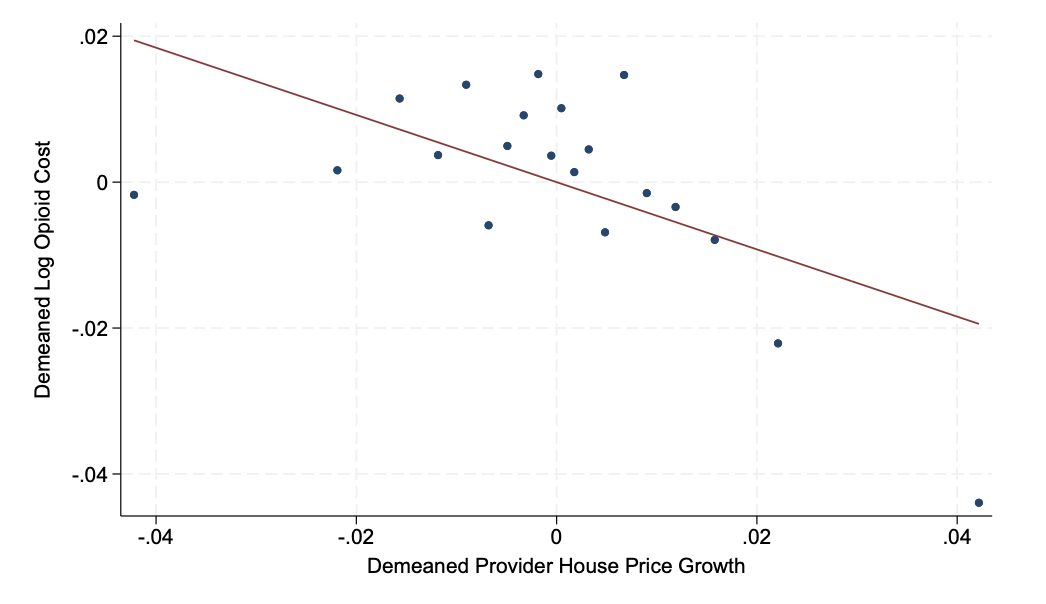 The deeper puzzle is why providers did not already maximize these incentives. The paper argues that negative wealth shocks tighten the objective function, making doctors more willing to exploit patient demand through short-acting opioid prescriptions, which boost repeat visits and patient satisfaction scores. This interpretation opens up questions about internal allocation: office managers or partners may decide which doctors see which patients, potentially channeling wealth-shocked providers toward patient segments more sensitive to opioids.
 - Dan Luo (CUHK) presented “Corporate Finance Through Loyalty Programs.” Typically, loyalty programs are viewed through the lens of industrial organization—as tools for boosting demand, sustaining markups, or raising switching costs. This paper instead takes a corporate finance perspective: loyalty programs function as a form of financing. The paper’s model shows that firms can raise funds at relatively low cost by offering consumers “convenience” in redemption, which increases willingness to hold points. But unlike bonds, the flow of financing is endogenously tied to consumer spending patterns and the firm’s issuance policies. This makes LP financing especially powerful for high-value, low-frequency services (like flights and hotel stays), where overaccumulation of points is common.
Day 2
- Jinyuan Zhang (UCLA) presented “Monetary Policy and Local Fiscal Policy”. The authors hand-collects and digitizes a comprehensive dataset of U.S. state budgets from 1995–2024 to study how Fed policy shocks filter into local fiscal behavior. The key finding is that a 10 bp contractionary monetary shock reduces state expenditure growth by about 3 percentage points, primarily coming from downward revisions in initial budget proposals, which explain more than 70% of the within-state variation in actual spending.
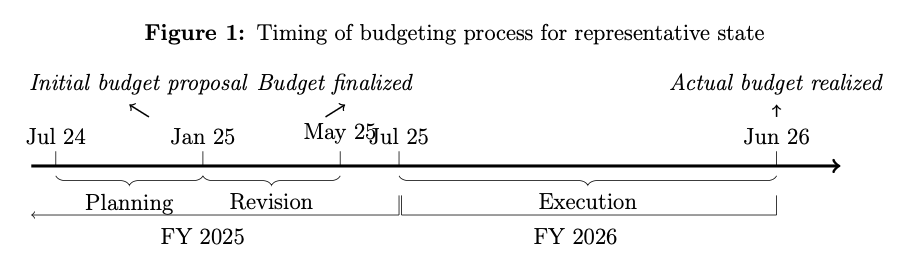 Two channels are central: (i) states revise revenue expectations downward when monetary conditions tighten, and (ii) debt-service costs rise, crowding out discretionary operating expenditures. These channels make fiscal behavior strongly asymmetric: states cut spending under tightening but cannot expand much under easing.
In discussion, Elena Loutskina raised two important points that I agreed with. First, some of the adjustment may reflect reliance on federal transfers, which states turn to disproportionately in recessions. Second, it is worth debating whether this margin qualifies as true fiscal “policy,” since state governments have limited discretion once budgets are locked in.
Two channels are central: (i) states revise revenue expectations downward when monetary conditions tighten, and (ii) debt-service costs rise, crowding out discretionary operating expenditures. These channels make fiscal behavior strongly asymmetric: states cut spending under tightening but cannot expand much under easing.
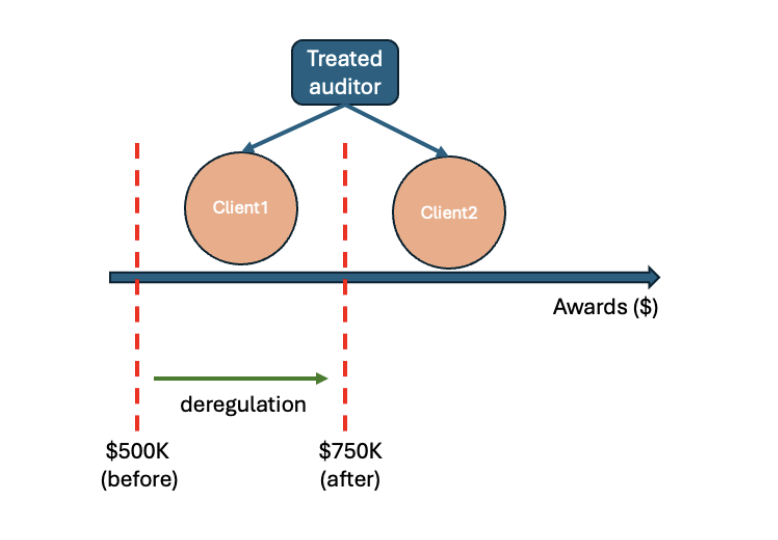
In discussion, Elena Loutskina raised two important points that I agreed with. First, some of the adjustment may reflect reliance on federal transfers, which states turn to disproportionately in recessions. Second, it is worth debating whether this margin qualifies as true fiscal “policy,” since state governments have limited discretion once budgets are locked in. - Joseph Kalmenovitz (Rochester) presented Contagious Deregulation. The paper examines how deregulation in one part of a market can spill over into unintended leniency elsewhere. The setting is the Single Audit Act, which requires entities receiving large federal awards to undergo independent audits. A 2015 reform raised the audit threshold from $500,000 to $750,000, exempting about 10% of award recipients. The authors show that auditors who lost small clients due to deregulation became more lenient with their remaining large clients, issuing fewer negative audit opinions. In effect, deregulating small awards weakened oversight of big awards—a “contagion” effect of deregulation.
 The discussant had run his own replication of the results and initially found the opposite effect—until it emerged that the sanitized dataset now available has 65% of observations redacted. By contrast, Kalmenovitz had obtained an earlier, more complete version of the data, which produced the published results.
 - Alex Corhay (Toronto) presented “Data, Markups, and Asset Prices.” The paper builds a production-based asset pricing model where firms hire data scientists to learn about consumer tastes. Better demand forecasting allows firms to increase the inelastic portion of demand, raising markups and profitability. Because hiring data scientists is countercyclical—firms invest in data when productivity shocks constrain output—the mechanism amplifies exposure to aggregate risk through an operating-leverage channel. A deeper challenge lies in measuring what “data” and “data scientists” actually mean. The paper operationalizes this through workforce composition, but the definition of a data scientist is fluid, spanning analysts, engineers, and economists. Job postings also reveal a mix of technical, forecasting, and pricing responsibilities, making it quite difficult to pin down whether firms are investing in genuine demand-learning capacity or simply in IT infrastructure.
- Dino Palazzo (Federal Reserve Board) presented Good Inflation, Bad Inflation, and the Dynamics of Credit Risk. The paper shows that the effect of inflation expectations on corporate credit spreads depends on whether inflation is perceived as “good” (demand-driven, correlated with growth) or “bad” (supply-driven, stagflationary). The mechanism operates primarily through credit risk premia, with stronger sensitivity among riskier and financially constrained firms.
- Alfred Lehar(Calgary) presented Market Power and the Bitcoin Protocol. The paper addresses the puzzling fact that a significant fraction of Bitcoin blocks are empty or under-filled even when transaction demand is high. Under competitive mining, miners should always fill blocks to capacity with the highest-fee transactions. Instead, the authors show that miners strategically leave blocks partially empty or process lower-fee transactions to enforce waiting times and extract higher fees in the future—a form of strategic capacity management. Mining pools facilitate this coordination, effectively granting miners market power
- Clemens Sialm (UT Austin) delivered the keynote address, focusing on his recent paper *“The Geography of Savings Opportunities in Retirement Plans.” *The paper shows that despite a decade of declining mutual fund fees, there remain stark geographic disparities in 401(k) plan costs and asset allocations. Workers in lower-income, less-educated, or more rural areas systematically face higher plan fees and poorer investment menus, even controlling for firm size and industry. These differences compound over time, producing substantial inequality in retirement wealth accumulation.
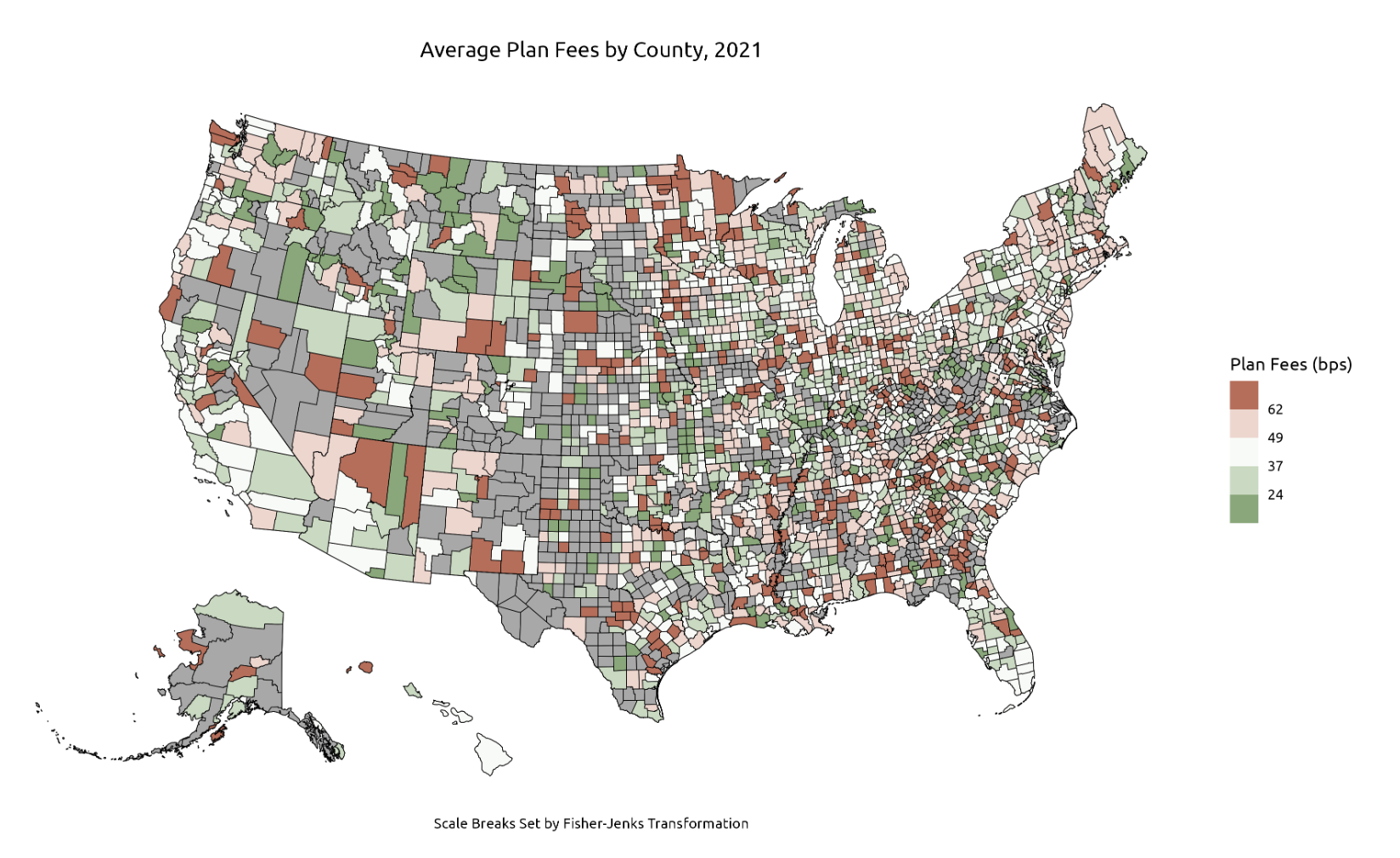 A striking feature is that much of the gap stems not from participant choice, but from menu design itself: the set of funds offered is simply worse in some geographies. This creates a structural divide in retirement opportunities, with Fresno plans charging nearly double the fees of San Jose plans, for example.
Takeaways
- I thought the program committee had excellent taste—every paper had a unique message, and taken together they made it clear that this really is a profession of “ideas.”
- The frequent coffee breaks and poster sessions created a natural rhythm for conversation. Having a break after every two papers turned out to be a very good idea.
- I finally had the chance to connect with researchers whose work I’ve long admired. One is Jordan Nickerson (University of Washington), famous for the car seats as contraception paper, and another is Joseph Kalmenovitz (Rochester), who has produced a lot of creative and rigorous work on regulatory economics. Meeting them in person added a nice personal dimension to ideas I’d previously only encountered on paper.