When Securitization Met Private Equity
Recently, there has been a discussion regarding the rise of collateralized fund obligations (CFOs), which pool together multiple private equity funds and issue securities backed by them. In this post, I summarize my brief investigation of their prevalence, economic motives behind their rise, and future research questions that may be of interest.
The Rise of CFOs
The concept of CFOs is not new; apparently in the early 2000s, there were many products that had hedge funds as their underlying assets.
Structure of CFOs
The structure of CFOs mirrors that of CLOs. Both use a multi-tiered tranche structure to distribute risk and return to investors and rely on a special purpose vehicle (SPV) for tax purposes.
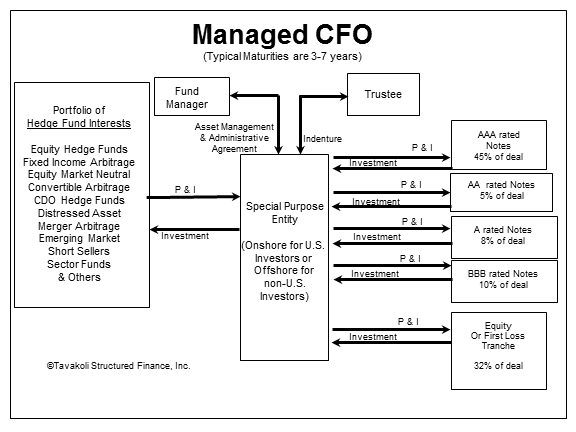
Unfortunately, this is a segment of the market that is practically unknown but has growing interest from both investors and regulators.
- In fact, NAIC (a pseudo-regulatory body for U.S. insurance companies) has been working on reform proposal that could reclassify some CFOs from debt to equity (more on that below).
Comparison of the C-Suite
The table below summarizes the comparison of CDOs, CLOs, and CFOs:
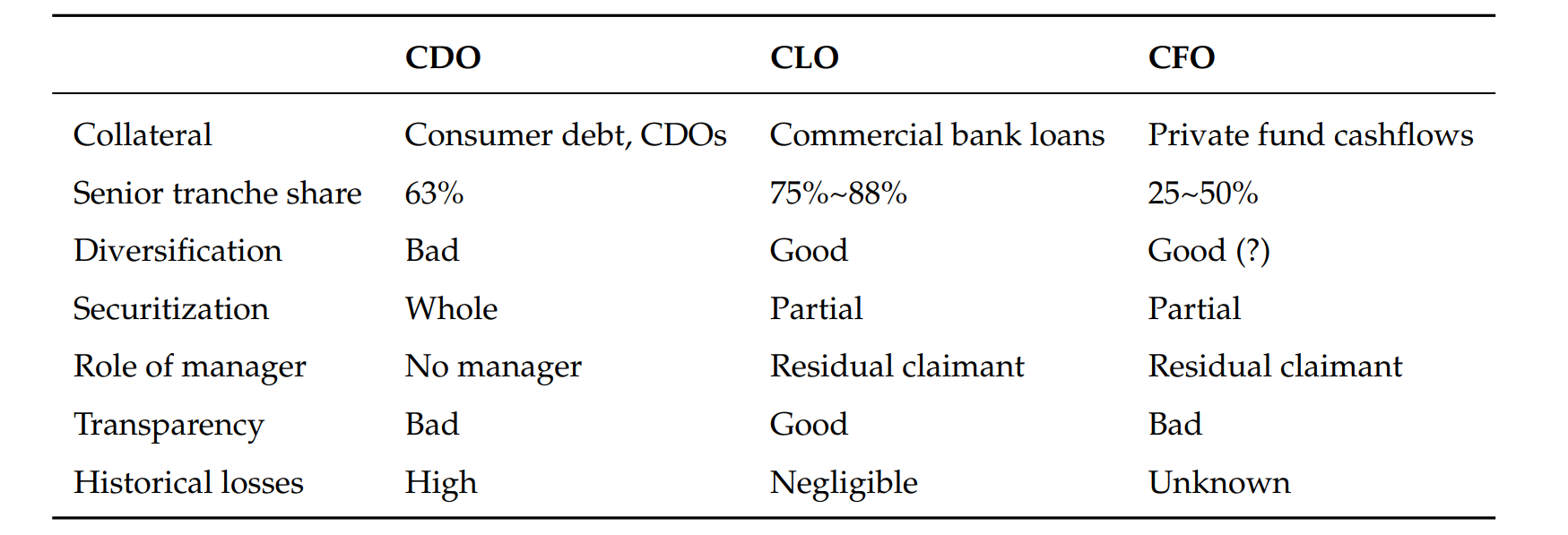
- Like CLOs, CFOs feature good diversification (across PE firms, that is) and features partial securitization of the underlying assets, which may alleviate adverse selection problem (Benmelech, Dlugosz, and Ivashina, 2012).
- There is little transparency around these products, and limited data on the underlying asset (PE funds) compounds this lack of transparency.
Timeline of Known CFOs
The timeline below represents the known timeline of deals that I was able to find publicly.
- Silver Leaf (2003) — Securitization of private equity fund assets by Deutsche Bank
- Pine Street (2003) — Securitization of private equity fund assets by AIG
- Tenzing (2004) — Securitization of private equity fund assets by Invesco
- Mizuho IM has launched its first CFO called Vintage I in 2007, a EUR 500 million fund investing in global buyout funds.
- In 2006 Temasek Holdings completed $810 million securitization of a portfolio of 46 private equity funds.
- SVG Capital has executed three CFO securitizations as part of its “Diamond” program, SVG Diamond (2004), SVG Diamond II (2006) and SVG Diamond III (2007).
- 2018.06: Temasek Holdings sold a $501 million CFO Astrea IV to local retail investors (subsequently followed by Astrea V and VI)
- 2018.07: Sightway Capital raised $216 million for a CFO, SWC Funding, that is backed by stakes in 32 private equity funds. (source)
- 2019: Coller Capital issues a CFO
- 2020: Coller Capital issues a CFO
- 2021: KKR issues at least two CFOs
- 2021: Ares issued raised $1 billion for a CFO
Economic Incentives behind CFOs
As far as I understand, there are two main reasons behind the demand for CFOs.
- Regulatory arbitrage. Many institutions, especially highly levered institutions, are regulated by how risky their asset side is.
- For example, in the context of insurance, investments in private equity carry a very high risk charge, thus making them very expensive from a risk capital perspective. CFOs potentially provide one way to circumvent this regulatory scheme by allowing CFO tranches to be treated as bonds, thereby making it a more efficient way to fund risky assets.
- Better access. For retail investors and smaller investors, CFOs — including their equity tranche — may be another way of accessing the private equity market, which prominently features barriers to investment.
Furthermore, there may be three main reasons behind the supply of CFOs:
- Regulatory arbitrage. Investors who currently hold PE stakes may have an incentive to “self-package” these assets and record a major fraction of them as “bonds” to economize on risk-based capital.
- Freeing up capital for new investments. For sovereign wealth funds and pension funds, the “denominator effect” is a major concern, in which movements in the public assets mechanically affect the share of assets in private equity, thereby preventing further commitment of capital. By setting up CFOs and holding onto the equity tranche, the investor maintains a levered position in private equity and frees up capital.
- Dealing with unprofitable funds. A PE firm that has many live funds may also have an incentive to issue a CFO backed by its funds, especially when some of the funds are struggling.
Example: Astrea IV Bonds (June 2018)
In June 2018, Temasek Holdings sold a $501 million CFO Astrea IV to local retail investors and other institutional investors. The underlying portfolio at the time had NAV of US $1.1 billion.
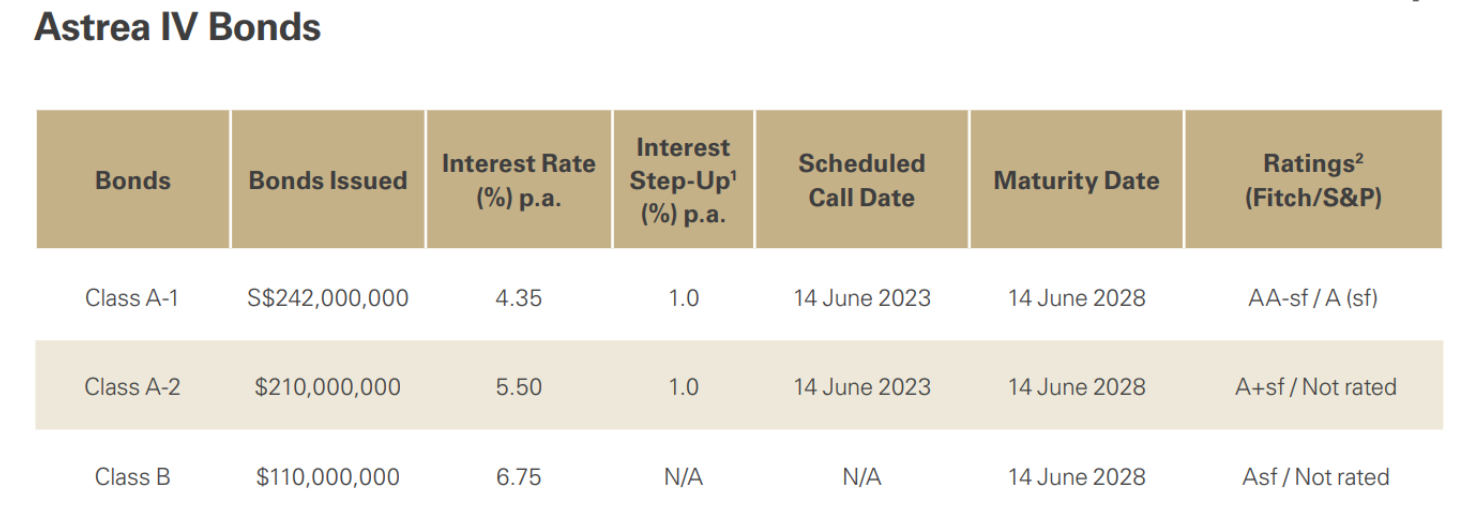
It also had many structural safeguards such as dedicated reserves account, sponsor sharing, maximum LTV, and a credit facility.
Region:72% of the underlying AUM were US-based.
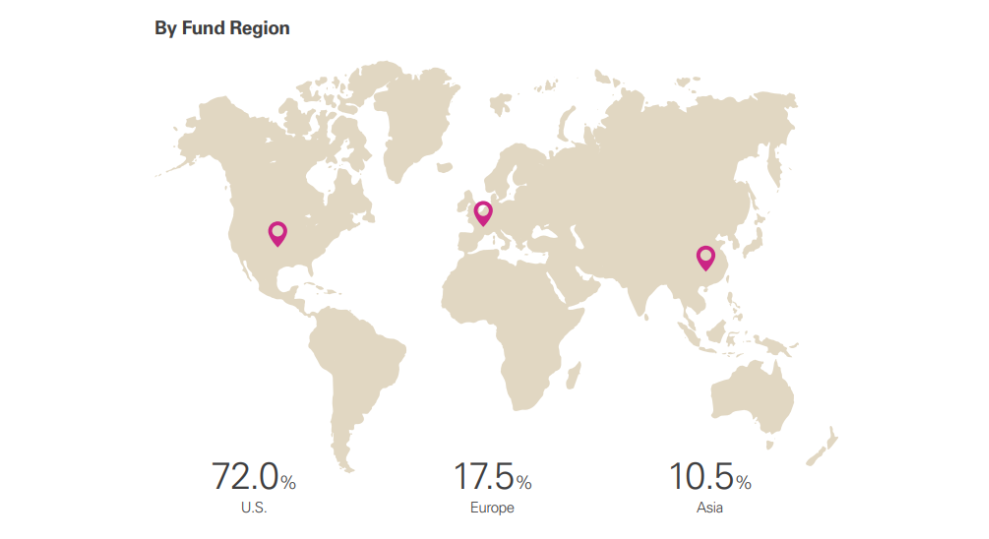
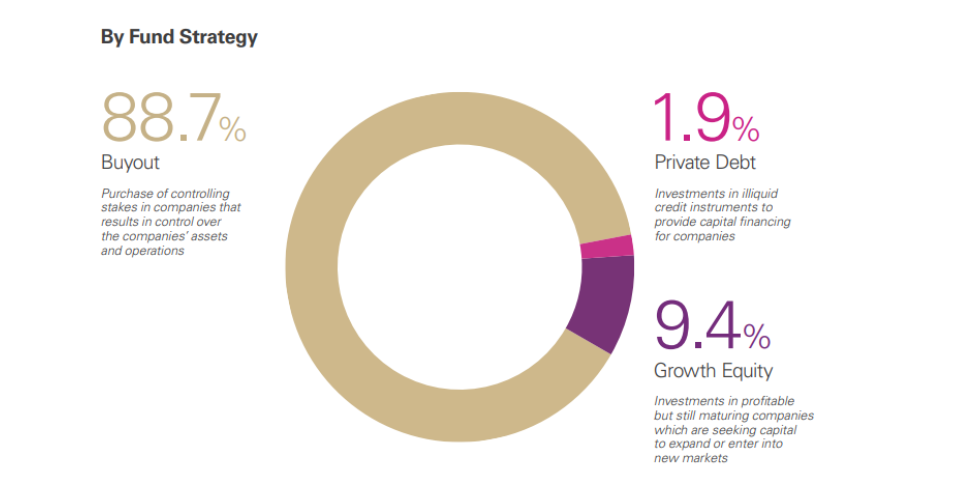
Strategy: 88.7% of the underlying AUM were buyouts, followed by 9.4% in growth equity and 1.9% in private debt.
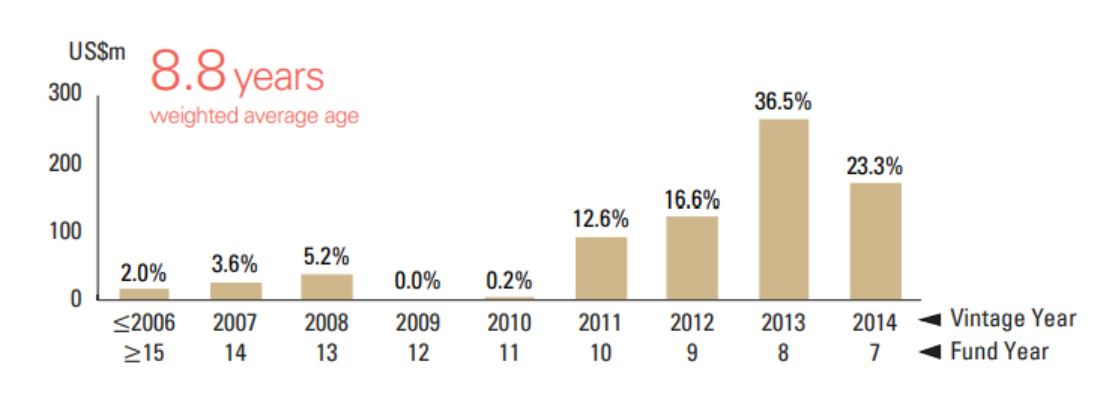
Vintage: The weighted average age of the fund is 8.8 years.
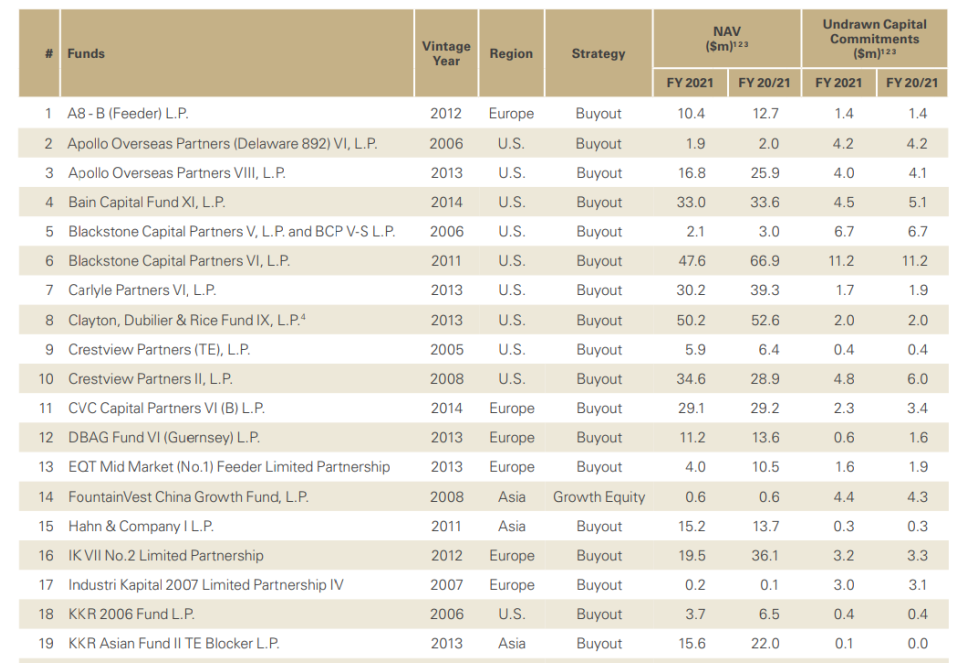
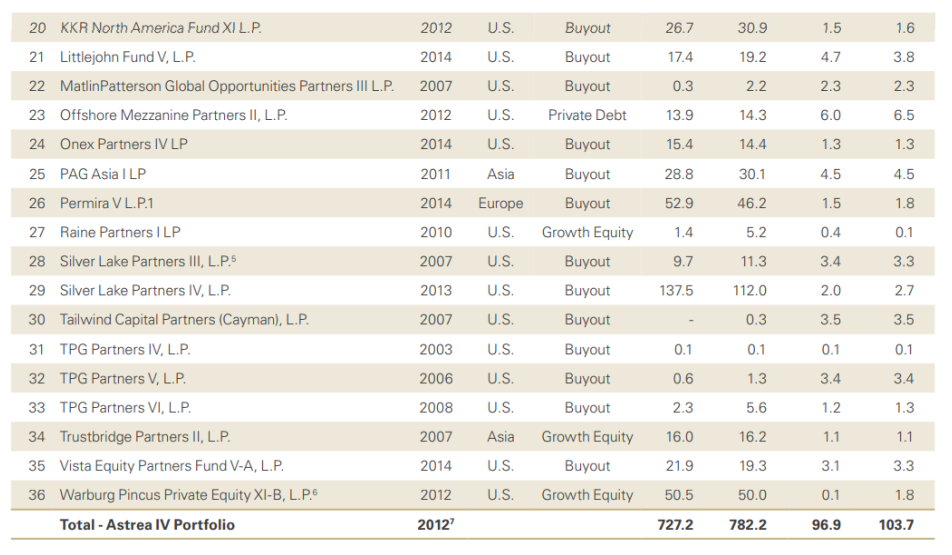
Underlying Assets: 36 PE funds, mostly well-known major firms
How Prevalent are CFOs?
I talked to several insurance regulators regarding the prevalence of CFOs and the related regulatory developments. Here’s a brief summary.
- For the 2021 year-end reporting, the NAIC had requested disclosures of “self-packaging” by insurers of their PE investments. But there were only two companies that actually reported within the disclosure.
- Majority of CFOs that are of concern are not self-packaging of PE stakes but rather investments into tranches of external CFOs.
- It is not easy to figure out which items on the balance sheet are CFOs. While investments will be reported on Schedule D and Schedule BA, there is no easy and standard way to distinguish a CFO investment from a non-CFO investment.
- CFO deals are not happening for other types of securities such as hedge fund stakes.
Research Questions
- Are there covenants designed to limit risk-shifting? Kundu (2022) documents the prevalence of coverage and quality covenants as well as concentration limits in CLOs and argues that they are designed as the remediation to the agency problem within the closed-end fund structure. Do we see similar set of covenants in CFO contracts as well?
- Is there adverse selection in the securitization process?
Adverse selection is one potential consequence of securitization.
- For CLOs, Benmelech, Dlugosz, and Ivashina (2012) find that securitized loans did not perform worse than comparable unsecuritized loans. In the case of Astrea IV, this at least seems unlikely as most of the funds are top feeder funds.
- Do third-party ratings make sense? On February 2022, Fitch upgraded Class A-1 bonds to AA from A+ and Class B bonds to A from BBB. Perhaps this may be a reflection of the fact that 2021 was a great year for buyouts, but are there potential problems that arise from incentive misalignment?
- Does it make sense to pool PE fund cash flows?
Existing literature in PE suggests that there may be benefits to diversification across funds but not much across vintages:
- Across funds: Robinson and Sensoy (2016) finds that variation in fund-level cash flows is purely idiosyncratic across funds of a given age at a given point in time, and Brown et al. (2022) finds that diversified PE investments increases Sharpe ratio.
- Across vintages: Robinson and Sensoy (2016) show that PE distributions are pro-cyclical, and Brown et al. (2021) finds that “cash calls cluster over time even for the negatively correlated commitments made by pro-cyclical and counter-cyclical allocation strategies.”